
In the present, more and more people are considering the possibility of converting commercial premises into residential homes in Malaga and in other major cities. Either by location, price or just for the opportunity to create a unique home, the change of use of local housing has become an attractive option.
But, what it actually involves this process? What are the benefits and the challenges that may present? In this article, we will provide you with a complete guide to help you understand the process better and make an informed decision.
This article is directed to any person who is considering the change of use of local housing, but has no prior experience in the topic. Throughout this article, from Living Kits the requirements for change of use, the planning regulations applicable, the types of licenses required, the associated costs, the impacts of urban development, examples of successful projects, the grants and subsidies available, and professionals involved in the process.
In this post, we delve into:
What does the change of use from commercial to residential consist of?
The change of use of local housing is an action by which it transforms a space, commercial, industrial or services in a livable dwelling. It is a process that involves a series of administrative procedures, permits and structural adaptations to ensure that the premises comply with the requirements of habitability and safety established by the regulations.
Why turn a commercial unit into a home?
he decision to convert a commercial unit into a home can be driven by a variety of factors. Among the most common are the growing demand for housing in urban areas, the optimisation of available space, and the revitalisation of neglected neighbourhoods. In addition, change of use can offer a unique opportunity to personalise and adapt the space to suit the owner’s needs and preferences.
There are several reasons why someone might consider the change of use of local housing. Some of the most common include:
- Location: Local business tend to be located in downtown areas and well connected, which makes them ideal places to live.
- Price: On many occasions, the price of a local business may be significantly lower than that of a housing in the same area.
- Personalization: A local offers a blank space that can be tailored to the needs and personal taste, allowing you to create a unique home.
Benefits of the change of use from commercial to residential
The benefits of converting a commercial unit into a home are wide-ranging. In addition to providing a housing solution in urban areas with high demand, this process can contribute to the regeneration of rundown neighbourhoods, increase the property’s value, and even offer the possibility of generating additional income through rental.
The change of use of local housing can offer a number of benefits, both at the personal level and at community level:
- Better use of space underutilized: Many shops remain empty for long periods of time. The change of use allows you to give them a new life and contribute to the revitalization of urban areas.
- Creation of affordable housing: The change of use may be an effective way to create affordable housing in areas where the price of housing is high.
- Sustainability: The rehabilitation of premises for use as a home can be a more sustainable option than the construction of new housing, because it takes advantage of existing structures and reduces the need for new building materials.
Requirements for the change of use from commercial to residential
Before embarking on the process of change, it is important to understand the requirements and procedures necessary to carry it out. From to obtain the appropriate licenses and permits to comply with the standards of habitability and safety, there are several aspects to consider to ensure a change of successful use.
These requirements may vary depending on the local regulations, but in general they include the following aspects:
- Surface minimum: In many cases, it is required that the local has a minimum surface area to be able to be converted into housing.
- Minimum height: There may also be requirements in terms of the height of the local.
- Accessibility: The location must be accessible and comply with accessibility standards.
- Ventilation and lighting: It is necessary that the premises have sufficient natural lighting and ventilation.
- Facilities: The premises must be provided with the necessary facilities for use as housing, as water, electricity and sanitation.
For example, in Malaga you must comply with the provisions of Section 7 “the SPECIFIC CONDITIONS OF THE BUILDING FOR RESIDENTIAL USE” title XII and comply with:
- Maximum density of housing that would be 1 housing each 70m2 of buildable.
- Surfaces useful minimum and conditions of distribution, which set the sizes minimum of each dependency in the face with the distribution
- Corridors and stairs, whose width for aisles shall be a minimum of 0.85 m
- Lighting and ventilation
- The entire stay will have lighting and ventilation directly to the outside through a hole of area not less than one-tenth (1/10) of the floor area of the room. It is understood by stay any reliance enabled of the home including the kitchen, thus being excluded hallways, distributors, closets or pantries and bathrooms.
- Except in cases expressly contained in the Ordinances specific Area, in the residential buildings are not allowed to bedrooms and interior rooms if you do not receive ventilation and lighting through at least yard of Lights. The other dependencies that are not intended to dorms and rooms, as well as stairs and accessory pieces inside, can ventilate and illuminate through the Courtyards of Ventilation, except in the stairwells protected should ventilate patios with the minimum dimensions as reflected in the Municipal Ordinance of Fire Protection
- In general it is fixed to a height-free absolute minimum ground Floor of 2.70 metres and 2.5 metres to the upper floor for the use of housing. In lobbies, hallways, and bathrooms the free height of at least completed floor and ceiling may be of 2.40 meters.
It is important to note that these are just some general examples, and specific requirements may also vary. Therefore, it is recommended to consult a professional or the local administration in order to obtain accurate and updated information.
Urban planning regulations applicable to the change of use from commercial to residential
Once you decide to convert your local on a house, it is crucial to become familiar with the planning regulations applicable in your area. This includes knowing about the licenses and permits required to perform the change of use, as well as to understand the specific requirements that must be met.
Necessary licenses and permits
The first step in the process of change of use is to obtain the licenses and permits required by local authorities. These may vary according to the location and the specific regulations of each municipality. Generally, a license is required for change of use, which involves the presentation of a technical documentation that demonstrates that the premises complies with the requirements of habitability and safety established by the law.
Technical documentation
The technical documentation required to obtain the license of change of use may include architectural plans, feasibility reports, technical and descriptive reports that detail the characteristics of the project. It is essential to have the advice of qualified professionals, such as architects and surveyors, to prepare this documentation in an appropriate manner and ensure their approval by the competent authorities.
Basically, the technical documentation shall justify that the project complies with:
- The Technical Building Code
- Basic requirements of the CTE
- Basic documents of the CTE (DB).
- DB – structural Safety
- DB IF – Safety in case of fire
- DB SUA – Safety in use and accessibility
- DB I – energy Saving
- DB HR – Protection against noise
- DB HS – Health
- The PGOU of the city in which you want to make the change
Other specific requirements
In addition to licenses and the technical documentation, there may be other specific requirements to be complied with according to the regulations of local planning. These may include aspects such as the protection of the historical heritage, the preservation of the traditional architecture or the incorporation of universal accessibility measures.
Understand and comply with the development regulations applicable it is essential to ensure a change of successful use and avoid legal problems in the future.
Types of licences required for the change of use from commercial to residential
When it comes to changing the use of a local housing, it is important to know the different types of licences that may be required, depending on the project and the local regulations. Below, we will explore some of the most common types of licenses that may be required:
License minor piece
This type of license is used for small-scale projects, such as interior renovations or modifications that do not affect the structure of the building. To change the use of a local housing, it is possible that a license is required to work less if the works are relatively simple and do not involve significant changes in the structure of the building.
License masterpiece
On the other hand, the works that involve significant changes in the structure of the building, such as the redistribution of spaces, or the construction of new facilities, may require a license for larger work. This type of license is usually required for larger projects and may involve a more complex process of processing.
Prior communication
In some cases, where the works performed will not require a technical project complete, it may be sufficient to submit a notice to the municipal authorities. This communication reports on the works to be performed and their compliance with the planning regulations, but does not involve the issuance of a technical report detailed.
Declaration of responsibility
Another option is to file a declaration of responsibility, in which the owner of the local declares under its own responsibility to comply with the requirements of the regulations to perform certain works or change of use. This mechanism speeds up administrative procedures do not require the prior approval of the authorities, but the owner remains responsible for compliance with the applicable regulations.
Each license type has its own characteristics and requirements, so it is important to consult with a professional to determine which one is most appropriate in each case.
Costs associated with the change of use from commercial to residential
The change of use of a local housing involves a number of costs that should be taken into account when planning the project. These costs can vary depending on several factors, including the size of the venue, its location and the state of conservation of the same. Below, we discuss some of the costs most common associated with this process:
Administrative fees
One of the initial costs that should be considered are the administrative fees that must be paid to the municipal authorities to obtain the necessary licenses and permits. These rates can vary depending on the municipality and the type of license applied for, but are typically a percentage of the total budget of the project.
To be able to find them on Google search for “Ordinance tax rate for urban development actions of the city council ...” and in acting classes search for “Change of use”
For example the cost in the Malaga city council would be 120€ for the change of use if you do not make works of adaptation and 7,5€/m2 if I had to make them.
Professional fees
Another important aspect to take into account are the professional fees of the different professionals involved in the project, such as architects, quantity surveyors, engineers and lawyers. These professionals play a critical role in the process of change of use, from the preparation of the technical documentation to the supervision of the works, and their fees may vary depending on the complexity of the project and the services provided.
Cost of work
Of course, you also have to consider the cost of the works necessary to adapt the local housing. These may include the demolition of walls, the installation of plumbing systems and electricity, renovation of exterior and interior finishes, among others. It is important to perform a detailed budget of the works envisaged in order to avoid unforeseen and control the costs of the project.
This is why a project manager to a professional that you include a detailed budget of games that are going to be affected in the work will help to power facilitarsela to a construction company, and that this gives you a budget for the works.
To make a number gordo estimated at under 500€/m2 but remember that it all depends on what you can take advantage of in the old local and what is not.
Taxes and duties
In addition to the costs directly related to the project, you must also take into account the taxes and charges that may be applied to the change of use of a local home. These may include the Value Added Tax (VAT) in the amount of the work in question, the Property transfer Tax (ITP) in your part of stamp duty as a modification is made to the situation assessment and value of the property, the Real Estate Tax (IBI) as varying the valuation to level the land registry of the well will also affection such tax or the Tax on Facilities and Works in your town (ING) among others.
For example, in Malaga the ING is 4% of the budget execution without VAT.
It is important to take into account all these costs when planning a change of use, the local housing to avoid surprises and to ensure the economic viability of the project.
Urban planning implications of the change of use from commercial to residential
The change of use of a local housing may have different impacts on the urban environment surrounding it. It is important to consider these impacts, both positive and negative when planning a project of this type. Below, we will explore some of the impacts of urban more relevant:
Population density
One of the main impacts of the change of use of local housing is the modification of the density of population in the area. The conversion of commercial or industrial houses, they can increase the population density in urban areas, which may have both advantages as well as disadvantages in terms of public services, infrastructure and quality of life.
For this reason, the PGOU of the cities indicate this value of density of population and the same must be respected.
For example, remember that we said that in Málaga art. 12.2.34 of title XII of his PGOU establishes a density of 1 dwelling each 70 m2 of buildable.
Public facilities
The change of use of a local housing may have implications on the demand for public facilities such as schools, hospitals, public transport and green areas. It is important to evaluate if the area has the necessary infrastructure to meet the needs of the new resident population and, on the contrary, to plan measures to improve the supply of public services.
Mobility and accessibility
The conversion of local housing can affect the mobility and accessibility in the area, particularly if you have not planned measures to manage the increase in traffic, or improve the transport infrastructure. It is important to assess the impact of the change of use on the local transport system and to plan measures to mitigate potential congestion and improve accessibility for all residents.
Environmental sustainability
Finally, the change of local use to home can have implications on the environmental sustainability of the area. It is important to assess the impact of the project in terms of consumption of natural resources, generation of waste and pollutant emissions, and to plan measures to reduce the environmental impact and to promote sustainable practices in the design and construction of new homes.
When considering these impacts, urban planning, it is possible to plan a change of local use to be the home of more sustainable and in harmony with the environment surrounding urban.
Financial support and subsidies for the change of use from commercial to residential
In addition to the inherent benefits to the change of local use at home, there are assistance programs and grants available for those who wish to undertake this type of project. Below, we will explore some of the options available:
Programs of aid to the rehabilitation
Many local governments offer programs that help the rehabilitation of buildings and urban spaces of gradients. These programs may include financial grants, technical assistance and administrative support to projects of change of local use) to housing.
Grants for the change of use
In addition to the programs of aid to rehabilitation, there are also specific subsidies for the change of use of local housing. These grants may cover part of the costs of the project, such as the works of adaptation and improvement of the space, and can be available to both private owners as well as for developers. It is important to learn about the conditions and requirements to access these grants, and to submit the application within the time limits set.
Tax incentives
Finally, some municipalities offer tax incentives to promote the rehabilitation and revitalization of urban areas through the change of use of local housing. These incentives may include bonuses in the Real Estate Tax (IBI), reductions in the Tax on Constructions, Installations and Works (ING) or tax exemptions for temporary projects of comprehensive rehabilitation.
These are just some of the options available in the field of aids and subsidies for the change of use of local housing. It is important to investigate and consult with the local authorities to know all the options available and take full advantage of the resources available to your project.
Professionals required for the change of use from commercial to residential
To carry out a change of use, the local housing so successful, it is essential to have the advice and collaboration of several professionals specialized in different areas. Below, we will introduce some of the professionals involved in this type of projects and their role in the process:
Architects
Architects play a critical role in the design and planning of the project. They are responsible for preparing the technical documentation required to obtain the appropriate licenses and permits, as well as designing the layout and finishes of the space according to the needs and preferences of the client.
Riggers
The riggers are responsible for the technical direction of the work and to ensure that we comply with all regulations and technical requirements during the execution of the project. They supervise the quality of the materials and the correct execution of the works, as well as the health and safety at work.
Engineers
Engineers may be involved in the project in order to perform technical studies specialized, such as those related to the installation of plumbing systems, electricity, heating, and air conditioning. Your experience is essential to ensure the proper functioning of all the facilities of the housing.
Attorneys
The lawyers can advise you on legal issues related to the change of local use to housing, such as the revision of contracts, the processing of licenses and permits, and the resolution of possible conflicts of laws. His knowledge of the regulatory and legal framework is essential to ensure compliance with all applicable regulations.
Administrative managers
The administrative managers may be in charge of the processing of permits and licenses necessary to the competent authorities, as well as the management of the administrative documentation related to the project. His experience in bureaucratic procedures can speed up the process and avoid possible delays.
Count with a multidisciplinary team of qualified professionals is key to carry out a change of local use to be the home of a successful manner, and to ensure compliance with all regulations and regulations applicable.
Examples of successful projects
To illustrate the benefits and possibilities of the change of local use at home, nothing better than to explore real-world examples of successful projects. Below, we will present some case studies from different types of locals who have been processed successfully on housing, livable:
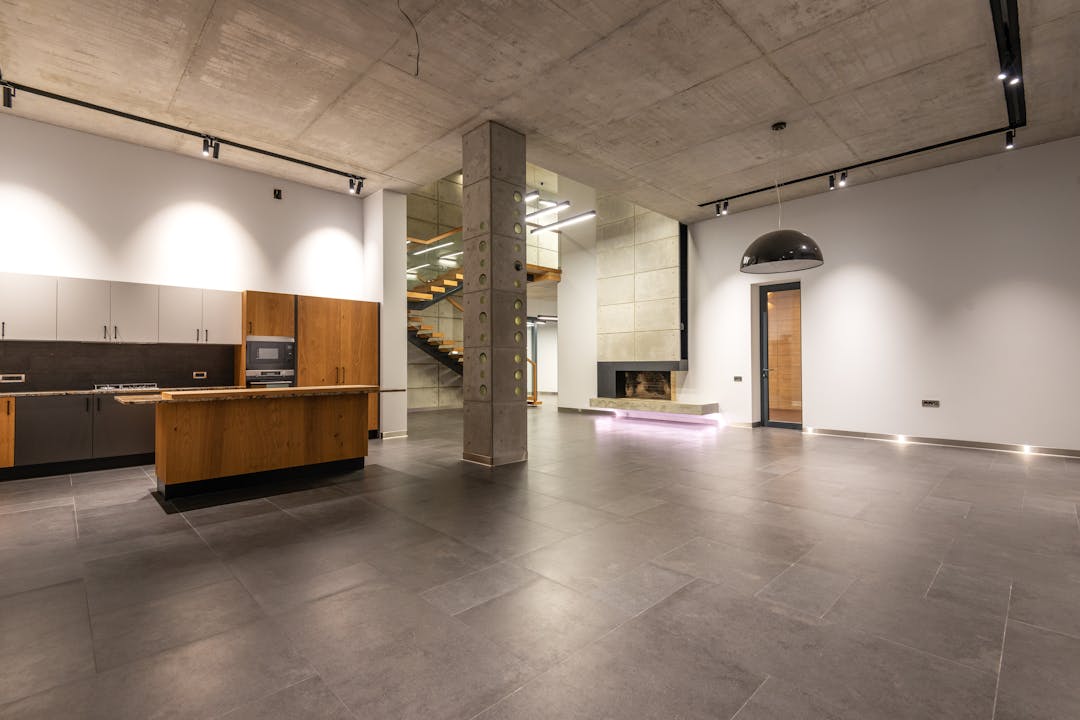
Old warehouse converted in modern loft
An old abandoned warehouse was transformed into a spacious loft modern design. With high ceilings, large windows and uncluttered layouts, this project was able to match the charming industrial building with all the amenities of a contemporary dwelling. The owners now enjoy a space unique and versatile that reflects your urban lifestyle.
Local business transformed into a cozy apartment
In a central neighborhood, a local business was converted into a loft of 120 m2 welcoming and functional. With smart distribution and use of natural materials, this project managed to make the most of the space available and create a warm and welcoming environment. The owners now enjoy a home as it is perfectly suited to your needs and lifestyle.
A local converted into housing (micasarevista.com)
Old factory transformed into luxury home
On the outskirts of the city, an old abandoned factory was transformed into an exclusive residential complex of luxury homes. With spacious gardens, common areas and services of high-end, this project managed to regain a industrial space into disuse and turn it into an urban oasis for its residents. The owners now enjoy a privileged way of life in a unique and exclusive environment.
These are just a few examples of successful projects-use change in local housing. Each one of them demonstrates the transformative potential of this type of projects and the capacity of adaptation of urban spaces to meet the needs of its inhabitants.
Stunning transformation of this old cement factory into a luxury apartment – Arquitectura Ideal
FAQs on the change of use from commercial to residential
Summary and key points
The change-of-use local home represents a unique opportunity to transform urban spaces underutilized homes welcoming and functional. Throughout this guide, we've explored the different aspects involved in this process, from the legal requirements to the costs and benefits associated.
Key considerations in the change of use from commercial to residential
- The change of local use to housing implies the transformation of commercial space, or industrial services in homes livable.
- It is necessary to comply with the development regulations applicable to, and obtaining the necessary licenses and permits before starting any project-use change.
- The costs associated with the change of use, which include administrative fees, professional fees, cost of labor and taxes and levies.
- The change of use can have various impacts, urban planning, both positive and negative, that should be taken into account when planning the project.
- There are grants and subsidies available to promote the rehabilitation and revitalization of urban spaces through the change of use of local housing.
- It is crucial to have the advice and cooperation of qualified professionals in all phases of the project to ensure its success.
Tips for successfully converting a commercial space into a home
- Perform a preliminary study to assess the feasibility of the project and determine requirements and necessary procedures.
- Count on the advice of specialized professionals, such as architects, quantity surveyors, engineers, and lawyers, to prepare the technical documentation and manage the administrative procedures.
- Carefully plan out the costs and budgets of the project to avoid problems and ensure their economic viability.
- To assess the impacts of urban planning of the project and to plan measures to mitigate potential problems, and promote environmental sustainability.
- Investigate the options available in the field of aid and subsidies and make the most of the resources available to the project.
Additional resources for more information
- Consult with local authorities and specialized professionals to get personalized advice on the process of change of local use to housing.
- Explore websites and publications specialized in architecture, urbanism and rehabilitation for up to date information and useful resources.
- Participate in courses, seminars and workshops on topics related to the change of use and the rehabilitation of urban spaces to expand their knowledge and share experiences with other professionals in the industry.
In summary, the change of local use at home is an attractive option and viable to revitalize urban spaces, and provide solutions for housing in areas with high demand. With the proper guidance and careful planning, it is possible to carry out successful projects that contribute to the sustainable development of our cities and improve the quality of life of its inhabitants.
Thank you for joining us in this comprehensive guide about the change of local use at home!