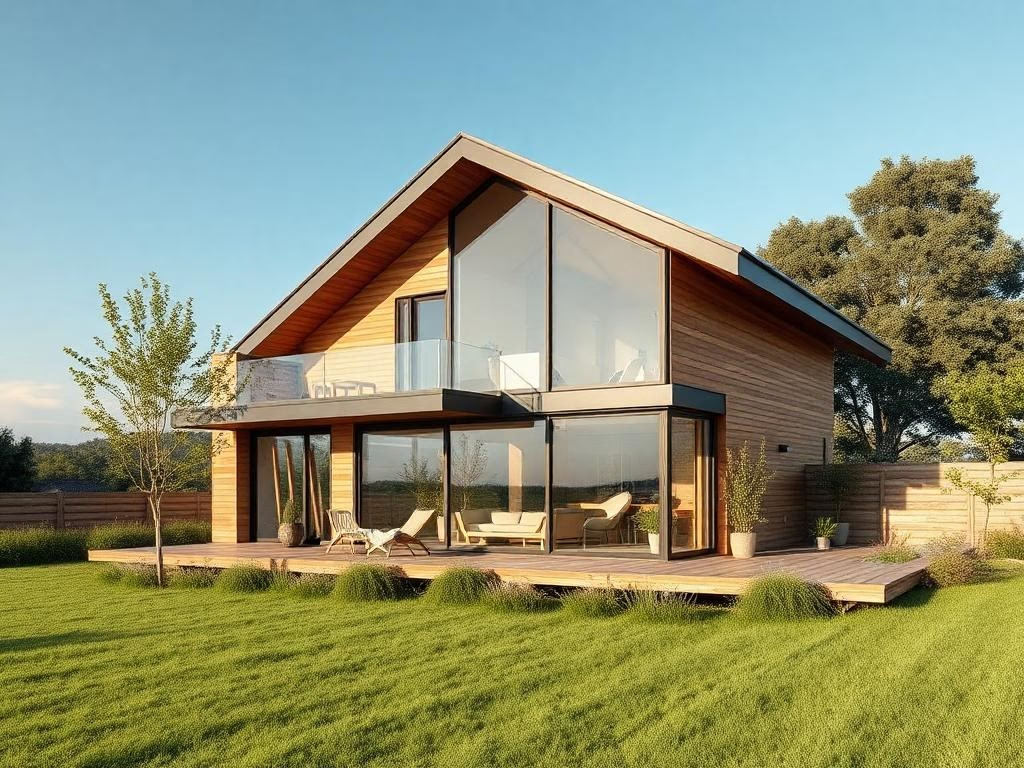
In this post, we delve into:
What is home automation and why is it important to know about it?
If we want to look for the meaning of the word smart home automation systems or a definition of it, we would say that it is a set of technologies and systems that allow the automation and control of different functions and devices in the home, providing greater comfort, safety, and convenience. energy efficiency. This discipline is based on the integration of electronic devices, communication networks, and software to create a smart and automated environment.
Or we could say that the word «smart home automation systems» comes from the combination of the words «domus» (which means «house» in Latin) and «robótica». In this way, reference is made to the application of robotic and electronic technology in the home environment. Home automation encompasses a wide variety of systems, such as automated lighting, temperature control, security systems, energy management, and the automation of blinds and curtains, among others.
But really the meaning, the definition and The main objective of home automation is to improve the quality of life of the residents., providing greater comfort and control over the different devices and systems in the home. In addition, it seeks optimizing energy consumption, Reduce costs and contribute to environmental protection by making a more efficient use of resources.
If it doesn't fulfill the above requirements, for us it isn't home automation. It will be a more or less complex set of sensors/actuators and the like, but just junk connected if you don't mind.
Knowing about home automation is important because it allows us to improve our lifestyle by making it more comfortable and efficient. Moreover, it can also help us save energy and money on our bills. Thanks to the integration between advanced hardware and software available today, it is possible to create highly personalized systems capable not only of simplifying many daily activities but also reducing operational costs and environmental impact.
Home automation is based on the interconnection of devices and systems through a network., Whether wireless or wired, these devices allow communication between them. These devices can include sensors to detect changes in the environment, such as presence, temperature, humidity, among others, and actuators that perform actions in response to the received signals, such as turning on or off lights, opening or closing doors, regulating the climate control, among others.

The control of home automation systems can be performed locally, from an interface located in the home itself, or remotely, through mobile devices or online platforms. This allows users to control and monitor their home from anywhere and at any time, providing greater flexibility and peace of mind.
Currently, home automation has gained increasing popularity due to technological advancements and the growing demand for smart solutions for the home. Understanding the fundamentals of home automation is crucial to maximizing its benefits and improving our quality of life.
Basic components of a home automation system: sensors, actuators, controllers, and interface devices
A home automation system It is composed of different elements that work together to provide functionality and automated control.
The sensors
They are responsible for collecting information about the environment and transmitting it to the home automation system. The sensors provide data that allow the system to make decisions and execute actions based on the conditions of the environment. For example, they can detect the temperature, humidity, or the presence of people in a room.
The actuators
They are the elements that allow actions to be performed based on the signals received by the sensors. For example, it can be a motor to automatically open a door or a blind, it can turn on or off lights, activate air conditioning systems, among others.
The controllers
They are the brains of the home automation system. They are responsible for processing all the information that arrives from the sensors and making decisions based on it to activate or deactivate connected devices in the system. The controllers can be central processing units (CPU), microcontrollers, computers, or specialized devices.
Finally, there are
The interface devices
These allow us to interact with the home automation system through control panels, smart switches, touch screens, smartphones or tablets. These devices facilitate the configuration and control of the system.
Ultimately, all these components work together to create a smart home where we can enjoy maximum comfort while reducing our environmental impact thanks to their energy efficiency. The tone is informative and positive, highlighting the benefits of home automation. It is emphasized that controllers are fundamental to the system’s operation and how they interact with connected sensors and devices. In addition, interface devices are mentioned as useful tools for interacting with the system from anywhere. In summary, it emphasizes how all these components work together to create an energy-efficient smart home while providing comfort to its inhabitants.
Operation of a home automation system: from detecting a signal to executing an action
The operation of a home automation system is based on a sequence of events that range from the detection of a signal to the execution of a specific action.
But, how would that process be step by step? Here is how I explain it:
- Signal detection: The sensors capture information from the environment, such as a person's movement, a change in temperature, or the detection of smoke. This data is sent to the system controller.
- Data processing: The controller receives the information from the sensors and processes it. It uses predefined algorithms and rules to determine the action to be taken based on the received data.
- Decision-making: Once the controller has processed the information, it makes decisions about what action should be executed based on the preset conditions. For example, if a motion sensor detects the presence of someone in a room, the controller can automatically turn on the lights.
- Action: The controller sends a signal to the corresponding actuators to perform the required action. For example, if it has been decided to turn on the lights, the controller will send a signal to the lighting actuators to turn them on.
- Feedback: Once the action is executed, the system can send a feedback signal to the controller to confirm that the action has been performed correctly. This allows the controller to maintain an updated state and make decisions accordingly.
Benefits and advantages of the application of home automation: security, comfort, energy savings and personalization
The advantages of a home automation system are based on the applications that we can implement in the home we are working in. Let’s look at the different applications we can have in a home automation system and the advantages we get from them.
In addition to home automation, a home automation system also it provides greater security by allowing access control and camera monitoring from anywhere. Home automation systems allow the integration of security alarms, motion sensors, surveillance cameras, and smart locks.
This provides greater control and protection for the home, allowing for the detection of intruders, receiving real-time notifications, and remotely activating alarms.
Comfort This is another important advantage as daily tasks can be programmed automatically. Home automation provides greater comfort by allowing you to control various home devices and functions automatically. From turning on and off lights with a single touch, adjusting room temperatures, scheduling the opening of blinds, or controlling the playback of music in different environments, comfort is at your fingertips with a smartphone or interface device.
The energy saving This is evident thanks to the efficient control of electricity consumption in the various devices connected to the home automation system. The automation of certain systems contributes to energy savings by enabling the efficient programming and control of electrical devices.
It is possible to set schedules for turning lights on and off, regulate the temperature of the heating or air conditioning system according to needs, and receive real-time information about energy consumption. This helps to reduce energy expenditure and associated costs.
Finally, it should be noted that these systems are Highly customizable to adapt to the specific needs of each user and their lifestyle, so the applications are all those that your mind can conceive of. Each person has different needs and preferences.
Home automation allows you to customize the home environment according to individual tastes. From the configuration of lighting and ambient sound to the creation of automated scenarios for different situations, such as «movie mode» or «dinner mode,» customization is one of the great advantages of home automation.
Therefore, investing in a home automation system can be an excellent option for improving our quality of life while contributing to environmental care through a more responsible and intelligent use of our energy resources.
Types of home automation systems according to their complexity and functionalities
There are different types of home automation systems that vary in complexity and functionality. From the simplest to true home assistants that help us make our daily lives easier. As we have mentioned, the idea of implementing a home automation system would not be being able to turn on a light from the other corner of the house, but rather having a system that helps us achieve greater comfort in the home.
Basic systems
Advanced systems
Integrated systems
Customized systems

Wireless vs. wired home automation: advantages and disadvantages
Home automation has revolutionized the way we interact with our home, providing us with greater comfort and control over the various systems and devices that make it up. On the market, We can find two main approaches regarding the connection of these systems: wireless home automation and wired home automation. Both options have their advantages and disadvantages, and it is important to know them in order to make an informed decision about which one best suits our needs.
The wireless home automation It is based on communication via radio or infrared signals, which allows the devices to be connected without the need for cables. This greatly facilitates installation, as no work is required or the home structure has to be altered to run the cables.
In addition, it provides flexibility, as the devices can be located anywhere without physical restrictions. Furthermore, wireless home automation allows for easy expansion of the system, as new devices can be added without complications.
However, wireless home automation also has some drawbacks. One of them is the possibility of interference, especially in environments with many electronic devices or where there are other wireless communication systems. This can affect the reliability and stability of the connection. Additionally, signal coverage can be limited in certain areas of the home, which can lead to communication problems between the devices.
To avoid these inconveniences, it is advisable to have a solid and stable home network using reliable and quality wireless communication technologies.
On the other hand, the Home automation with wiring It involves the installation of cables that connect the different devices and systems in the home. This provides a more stable and reliable connection, as it is not subject to electromagnetic interference or signal coverage issues. Additionally, home automation with wiring usually offers higher bandwidth, allowing for faster and larger data transmission.
This is especially relevant in systems that require high transfer speeds, such as high-definition video transmission. However, home automation with wiring presents some challenges in terms of installation. It requires the construction of works and conduits to run the cables, which involves a time and resource investment.
Furthermore, once the cables are installed, modifying or expanding the system can be more complicated compared to wireless home automation. This requires careful planning and detailed system design from the outset.
The choice between the two will depend on the individual needs and preferences of each user. If simplicity, flexibility, and the ability to easily expand the system are sought, wireless home automation may be the best option. On the other hand, if a more stable, reliable, and faster connection is sought, wired home automation may be the right choice. In any case, it is important to have a reliable and quality home automation system, regardless of the chosen option.
Summary of advantages and disadvantages of each option so that you are clear about:
Wireless home automation
Home automation with wiring
In this approach, the devices are connected using physical cables, which provides a more stable and reliable connection. The wiring allows for higher data transmission speeds and is not affected by external interference. However, installation requires more thorough planning and can be more expensive, especially in already built homes.
As can be seen, the choice between wireless and wired home automation will depend on individual needs and preferences, as well as the characteristics and structure of the home.
Remote control and time programming in home automation systems
One of the most notable aspects of home automation is the ability to control and monitor the home remotely. Thanks to technological advancements, it is possible to use mobile devices, such as smartphones or tablets, to control home automation systems from anywhere and at any time. This functionality provides comfort and peace of mind for users, as they can access their home and make adjustments even when they are not physically present.
The remote control in home automation systems allows performing a wide variety of actions, such as turning on or off lights, adjusting the ambient temperature, closing or opening blinds, activating security systems, and much more. Through a mobile app or an online platform, users can access an intuitive and easy-to-use interface to control all the connected devices and systems in their home.
In addition to the remote control, Home automation systems also offer the possibility of programming actions automatically and according to preset schedules. This means that daily, weekly, or monthly routines can be programmed so that the home performs certain actions automatically. For example, it is possible to program the lighting to turn on and off at certain times, simulate the presence of people during periods of absence, or even adjust the home temperature based on the time of day or personal preferences.
Timely programming in home automation systems not only provides convenience but can also contribute to energy savings. By programming lighting or the heating/air conditioning system to adjust automatically according to needs, unnecessary energy consumption is avoided when no one is at home or during hours of lower activity. This translates into a reduction in energy costs and a positive impact on the environment.
Integration with mobile devices for remote control from anywhere
The integration of home automation systems with mobile devices, such as smartphones and tablets, has been one of the most significant advancements in this technology. Thanks to this integration, users can control and monitor their home from anywhere and at any time, through an Internet connection.
The connection between home automation systems and mobile devices is made through specific applications or online platforms. These applications provide an intuitive and easy-to-use interface, allowing you to control and adjust the various devices and systems in your home with just a few touches on the screen of your mobile device.

Remote control from mobile devices It offers a wide range of possibilities. For example, users can turn on or turn off the lights before arriving home, adjust the ambient temperature while they are in the office, receive notifications in case of motion detection in the home, and view real-time images from the security cameras, among many other actions.
In addition, the integration with mobile devices also allows receiving real-time information and data about the status of the different home systems and devices. For example, you can receive information about energy consumption, air quality, and home security, among other relevant data. This provides users with greater control and knowledge about their home, allowing them to make informed decisions to optimize its operation.
Current trends in the development of home automation systems: artificial intelligence, machine learning, and big data
Home automation is not a static technology; it continues to evolve and adapt to new trends and technological advancements. Currently, concepts and tools such as artificial intelligence, machine learning, and big data are being incorporated into home automation systems, which provide new possibilities and improvements in terms of functionality and efficiency.
Artificial intelligence (AI)
It refers to the ability of machines to mimic human behavior and make intelligent decisions. In the context of home automation, AI is used to improve the automation and control of home systems. For example, AI algorithms can be used to learn users' preferences and routines, and then automatically adjust lighting, temperature, and other aspects in accordance with those preferences.
Machine learning
It is a branch of artificial intelligence that focuses on developing algorithms and models that allow machines to learn and improve based on data. In home automation, machine learning is used to analyze patterns and data collected from home devices and systems, enabling the delivery of personalized recommendations, the detection of anomalies, and the optimization of energy efficiency.
Big Data
It refers to the management and analysis of large volumes of data. In the context of home automation, systems can collect and process a large amount of information about the home, such as energy consumption, room occupancy, and usage habits. Through the analysis of this data, valuable insights can be obtained that help improve energy efficiency, safety, and comfort.
These current trends in the development of home automation systems are driving the creation of smarter and more adaptive homes, capable of learning and adapting to the individual needs and preferences of users. The incorporation of artificial intelligence, machine learning, and big data in home automation promises to provide a more personalized and efficient experience., thus contributing to improving our quality of life at home.
Conclusion: The growing importance of home automation and its future prospects as a tool to improve our quality of life
Knowing what home automation is and how it works has many benefits both for our daily lives and for the environment, either by improving our quality of life through greater comfort and safety while optimizing energy consumption.
Home automation has experienced significant growth in recent years and has become an integral part of modern life. The ability to control and automate different aspects of the home, such as lighting, climate control, security, and other systems, provides comfort, safety, and energy efficiency.
Home automation not only provides practical benefits, but also It also offers opportunities to customize and adapt the home according to individual needs and preferences. Through remote control and time programming, users can create routines and scenarios that suit their lifestyle, thereby improving comfort and efficiency in the home.
Furthermore, current trends in the development of home automation systems, such as the integration of artificial intelligence, machine learning, and big data, promise to take this technology to an even more advanced level. The ability to learn and adapt through intelligent algorithms and models will enable home automation systems to provide personalized and optimized experiences, further improving our quality of life at home.
In short, home automation is a technology that is transforming the way we interact with our homes. Its ability to automate, control remotely, schedule time, and customize provides tangible benefits in terms of comfort, safety, energy savings, and efficiency.
As technology advances, we can expect new improvements and features in home automation systems, which opens up exciting perspectives for the future and its role as a tool to improve our quality of life in the home, so Investing in home automation can be an excellent option to improve our quality of life while we contribute to the care of the environment.
I hope this article has provided you with valuable and useful information about home automation. If you have any other questions or concerns, Do not hesitate to contact us. Your smart home is just a step away!